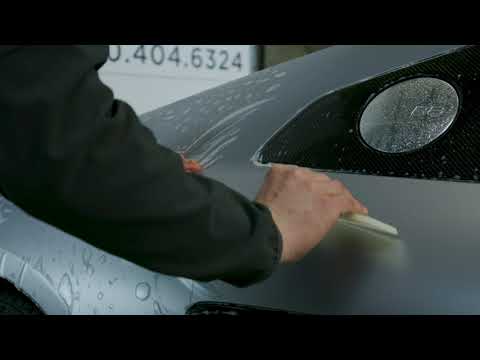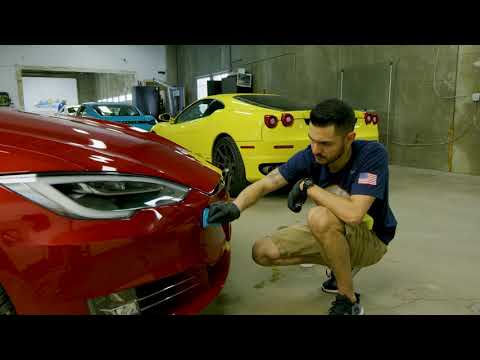
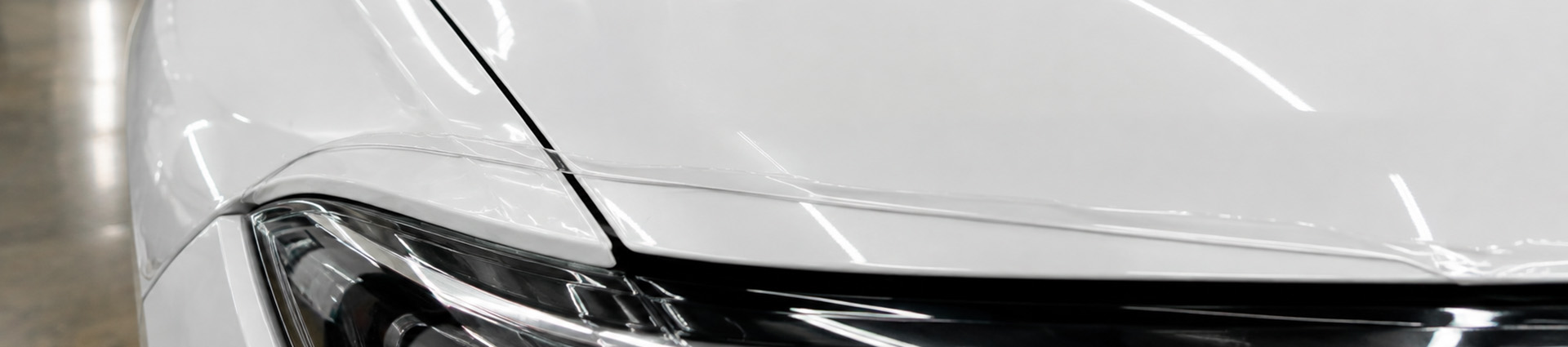

Does paint protection film turn yellow? It’s one of the most common questions Denver car owners ask before committing to PPF, and the honest answer is: rarely, if you are working with quality film and a professional installation. Modern paint protection film from brands like SunTek and 3M is engineered specifically to resist yellowing under UV exposure, and when discoloration does show up, it’s almost never the film technology itself failing — it’s low-quality materials, a bad install, or both.
At Colorado Clear Bra, Kirby Thompson has been installing paint protection film in the Denver area for 25 years, which means he’s watched this technology evolve from the early days, when yellowing was a legitimate concern, to today’s films, which hold their clarity for the life of the warranty when installed correctly. If this question is what’s keeping you from protecting your car’s paint, you deserve a straight answer instead of a sales pitch.
Table of Contents: Does Paint Protection Film Turn Yellow?
Does Paint Protection Film Yellow With Age? Why It Used to Happen
The reputation PPF has for yellowing comes from somewhere real. In the early days of the technology, films from the late ’90s and 2000s used thermoplastic urethane and adhesive chemistry that weren’t built to withstand years of continuous sunlight. Over time, those early adhesives would oxidize, and the discoloration would show up as a yellow or amber tint, especially around the edges where the film was most exposed to heat and moisture.
That reputation stuck around long after the technology moved past it, the same way people still assume window tint bubbles and peels even though quality film solved that years ago. Kirby installed both eras of this film, and the difference in how today’s thermoplastic polyurethane formulations age compared to what was available fifteen years ago isn’t subtle.

What Causes PPF to Turn Yellow Today: UV Exposure and Low-Quality Materials
Not all PPFs are created equal, and that’s really the starting point for understanding modern yellowing. Low-quality materials are the most common culprit — budget films often skip the UV inhibitors and higher-grade topcoats that help premium film resist oxidation, so they simply don’t have the same chemical resistance to sun exposure that a certified brand does.
Improper installation is the second major factor. If edges aren’t fully sealed, extended sun exposure and moisture can work their way into the adhesive layer from the outside in, which is often where yellowing starts rather than spreading evenly across a panel. Lack of proper care plays a role too — film that never gets a real wash routine, or gets hit with harsh chemicals from an automatic wash, breaks down its protective topcoat faster than film that’s treated well.
Then there’s Denver’s altitude. UV radiation here is measurably more intense than at sea level, which doesn’t hurt high-quality film with real UV inhibitors, but it will expose the weaknesses in low-quality materials faster than a more temperate climate would. If you frequently drive Colorado’s high-altitude routes, film and installation quality matter more here than in most markets.
Rock Chips, Road Debris, and What PPF Is Actually Protecting Your Car’s Paint From
It’s worth stepping back to what this film is doing in the first place, since the yellowing conversation only matters because the film is working hard the rest of the time. PPF’s main job is to shield your car’s paint from rock chips, road debris, bug splatter, tree sap, bird droppings, and the everyday grit Colorado highways throw at a windshield-facing panel. A quality topcoat also helps the film resist minor scratches, self-healing them with heat rather than letting them scar the surface.
That same film has to hold up against acid rain, industrial fallout, and general dirt without breaking down — which is exactly the same chemical resistance that keeps it from yellowing. A film that can’t resist oxidation from UV exposure generally can’t resist the chemical stress of these contaminants either. The two problems are more connected than most people realize.
SunTek and 3M Are Built to Resist Yellowing With Professional Installation
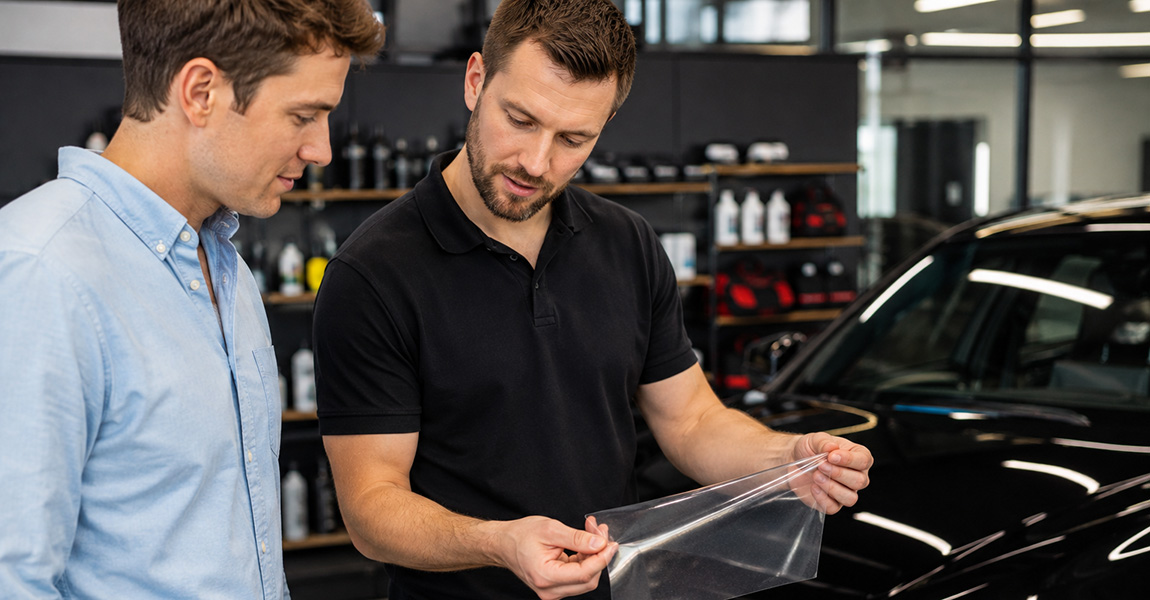
This is where film brand and professional installation both matter. Premium PPF like SunTek’s Ultra line is built with a UV-resistant topcoat and adhesive system specifically engineered against yellowing, and SunTek backs that with a manufacturer’s limited warranty covering cracking, bubbling, and yellowing. 3M’s Scotchgard Pro Series carries a similar 10-year consumer warranty, and 3M explicitly warrants the film against yellowing as part of its coverage.
Those warranties aren’t marketing — they’re the manufacturer standing behind a claim that their film won’t discolor under normal conditions. If long-term clarity matters, it’s a no-brainer to choose one of these two brands. We install SunTek Reaction PPF and 3M Clear Bra at our Arvada shop for exactly this reason, and both have proven track records on Denver vehicles that sit outside through intense summer sun and winter road salt. For a deeper look at how these two brands compare, see our film comparison guide.
Professional installers can also help determine whether visible yellowing on an existing install is actual film degradation or just surface contamination—a distinction that matters a lot for what happens next, and one that’s hard to make without a trained eye.
How Installation Quality Protects Your Car’s Paint
This is the part most PPF articles skip, and it’s arguably the biggest variable in whether film yellows early. A film’s UV resistance only matters if the install keeps air and moisture out from the start. Exposed edges or seams that aren’t properly tucked and sealed give oxygen and contaminants a direct path into the adhesive layer.
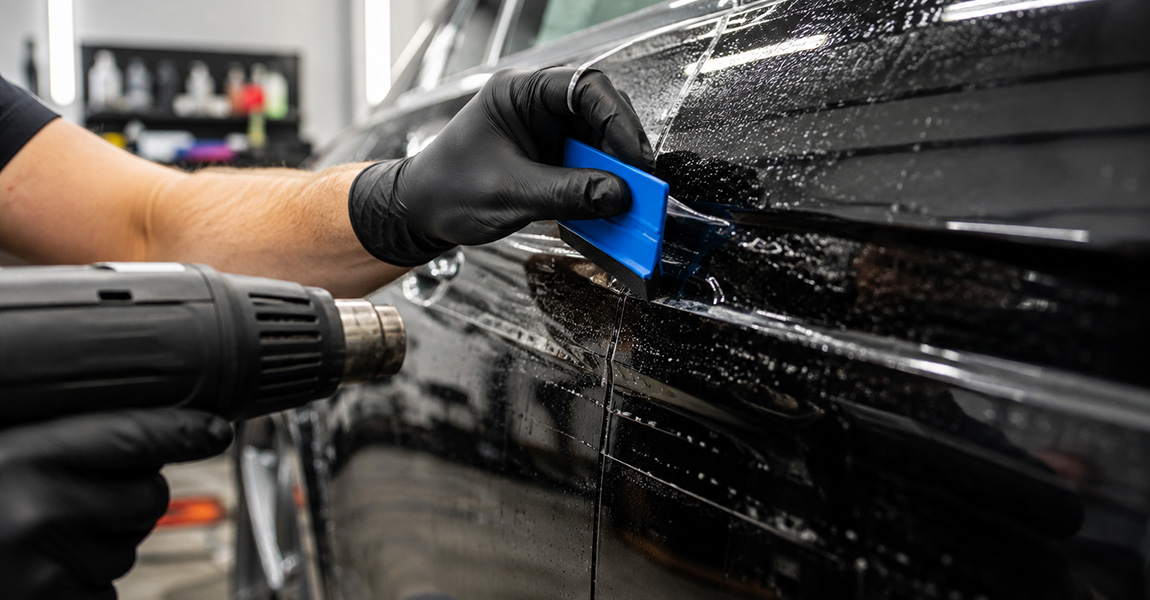
Kirby’s approach has always been to tuck every edge and eliminate visible seams, air bubbles, and creases on every install — whether it’s a partial front-end kit or a full-vehicle wrap. That’s not just cosmetic. A properly sealed edge, done by certified installers, is a big part of what keeps a surface smooth, clear, and free of the early edge-yellowing that shows up on poorly installed jobs.
What to Ask Before You Buy: A Quick Checklist
Since installation quality matters as much as the film itself, it’s worth knowing what to ask before you commit to a shop. A few questions separate a shop that stands behind its work from one that doesn’t:
Which film line are they installing, and is it a certified brand like SunTek or 3M rather than an unnamed or off-brand roll? Is the installer certified by the film manufacturer, and can they show you examples of past work on a similar vehicle? Does the film come with a manufacturer warranty registered in your name, or only a shop-level guarantee? Will the shop walk you through the edge-sealing technique, or do they treat that detail as an afterthought?
Any reputable installer should answer these without hesitation. If a shop is vague about which film they’re using or can’t explain their edge-tucking process, that’s worth taking seriously — it’s often a sign the shop is cutting corners somewhere you won’t notice until the film starts to fail.
Does Ceramic Coating Over PPF Help Prevent Yellowing?
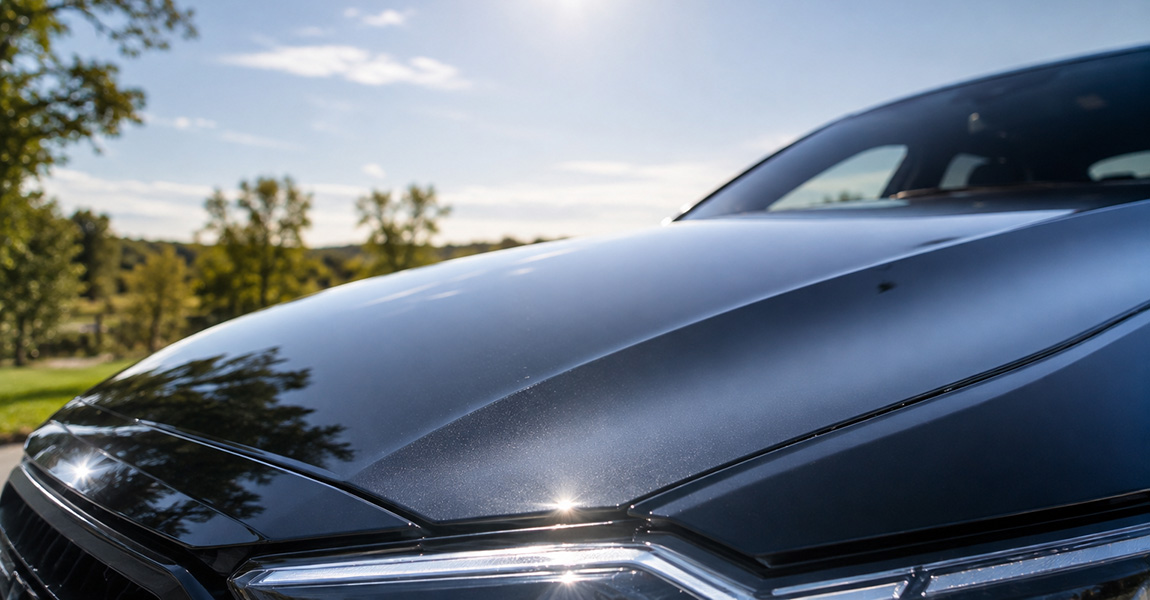
Yes, and it’s one of the more underrated ways to extend the life of a clear bra install. A ceramic topcoat adds another UV- and chemical-resistant layer on top of the film, reducing the daily stress from direct sunlight, industrial fallout, and harsh chemicals that would otherwise hit the PPF directly. Regular washing and sealing with a ceramic topcoat can prevent contaminants from embedding in the paint protection film in the first place, which matters as much as UV resistance.
Pairing ceramic coating with PPF is one of the most common upgrades we recommend, especially for anyone who parks outside daily. Opti-Coat Pro is one of the strongest options we install for this, and it pairs cleanly with SunTek or 3M film without affecting the film’s self-healing properties.
Do White Cars Show PPF Yellowing More Than Other Colors?
It’s a fair question, and the answer is mostly about visibility rather than the film reacting differently to paint color. Any yellow tint is simply more noticeable against a white or light-colored panel than against a dark one, where the same discoloration can blend in and go unnoticed longer. That doesn’t mean white cars need different film — it means white cars tend to show early yellowing sooner, which is an advantage if it means addressing the problem before it spreads.
Signs Your PPF Is Starting to Turn Yellow
Early yellowing usually shows up subtly before it’s obvious. Watch for a slight haze or amber tint concentrated at the film’s edges rather than spread evenly, a visible color difference between the protected panel and the surrounding paint, or film that’s started to feel stiff instead of flexible. Any of these are worth having inspected before the problem spreads across the whole panel.
What to Do If Your PPF Is Yellowing Under Warranty
If you’re seeing early discoloration on film that’s still within its warranty window, the process is more straightforward than most owners expect, but it starts with the right first step. For both SunTek and 3M, your first call should go to the original installer rather than the manufacturer directly—both brands route warranty claims through the installer, or a manufacturer-selected installer, for inspection before approving anything. If the original shop isn’t available or isn’t responsive, both SunTek and 3M also maintain a direct customer line that will connect you with an authorized installer near you.
What you’ll need on hand: your original receipt and any warranty registration paperwork completed at the time of install, since both manufacturers require this to substantiate a claim. This is why registering your film’s warranty right after installation matters—an unregistered install can complicate or delay a legitimate claim. Once an inspection confirms the discoloration is a covered defect rather than surface contamination or misuse damage, the manufacturer-backed remedy is typically removal and replacement of the affected film at no charge for materials.
This is also where working with a certified installer pays off well after the sale. Because we register every SunTek and 3M install we do, our customers have that documentation on file if they ever need to file a claim, rather than searching for paperwork years after the job.

How to Keep PPF Looking Clear for Years
Longevity comes down to a handful of habits, most of them simple. Wash regularly using PPF-safe cleaning products and warm water rather than letting road grime sit for weeks. Avoid harsh chemicals and automatic car washes with abrasive brushes, which wear down the topcoat faster than a gentle hand wash. Park in shade or a garage when you can, and consider a car cover for vehicles that sit outside for extended sun exposure — both go a long way toward minimizing UV exposure and slowing yellowing.
Colorado’s seasonal extremes deserve specific attention: winter road salt accelerates adhesive breakdown if you don’t rinse it off regularly, and intense summer sun at altitude stresses low-quality materials more than most owners expect. Keeping film polished and properly maintained also helps preserve your car’s resale value, since a car with clear, well-maintained PPF and factory paint free of chips and UV fading generally shows better than one without it. We cover a full seasonal care routine in our ceramic coating maintenance guide, which applies just as well to a car running both PPF and a ceramic topcoat.
The film itself is only half the equation. Quality material, a clean professional installation with fully sealed edges, and consistent, proper care determine whether the same film stays clear for its full warranty period or starts showing color at year three.
If you’re weighing PPF for a new vehicle, or want an honest look at film that’s already showing early wear, we’re happy to take a look. You can request a free estimate or call us directly at 720-404-6324. Learn about Does Paint Protection Film Turn Yellow?
FAQ: Does Paint Protection Film Turn Yellow?
Does all paint protection film eventually turn yellow?
No. Older-generation film was more prone to yellowing because of weaker adhesive chemistry, but modern film from brands like SunTek and 3M is built with UV-stable adhesives and topcoats specifically to prevent it under professional installation and proper care.
How long before high-quality PPF like SunTek or 3M shows yellowing?
Premium film shouldn’t show yellowing at all within its warranty period, which runs up to 10 years for both SunTek Ultra and 3M’s Scotchgard Pro Series when professionally installed and maintained. Early discoloration usually points to low-quality materials, a poor install, or lack of maintenance rather than the film reaching a normal age limit.
Can yellowed PPF be fixed, or does it need to be replaced?
It depends on the cause. Surface contamination or staining can sometimes be corrected with proper decontamination and polishing. True yellowing from UV exposure or adhesive breakdown within the film itself typically can’t be reversed, and the film needs to be removed and replaced.
Does ceramic coating stop PPF from yellowing?
Ceramic coating doesn’t make film immune to yellowing, but it adds a UV- and chemical-resistant layer on top of the PPF that reduces the daily wear contributing to discoloration, which can meaningfully extend how long the film stays clear.
What’s the process for filing a warranty claim if my PPF yellows?
Contact your original installer first for an inspection — both SunTek and 3M route claims through the installer before approving a remedy. Have your original receipt and warranty registration on hand, since both manufacturers require this documentation to process a claim.
Do white cars show PPF yellowing more than other colors?
Not technically — the film reacts to UV exposure the same way regardless of paint color. Yellowing is simply more visible against white or light-colored paint than it is against darker colors, where the same discoloration can go unnoticed longer.